
Not all musicians earn 100% of their money playing gigs or working in the studio. Sometimes, the sheer flexibility of being able to grab your instrument and hit the streets means that busking is a convenient way to earn some extra cash. In this blog, we’ll provide our top tips for busking and let you know how much you could make…
Whether you are looking to work your way up to performing live and booking gigs or just looking to earn a little extra cash in your spare time between professional engagements, busking can be incredibly useful to both professional and semi-pro musicians.
It is not entirely unheard of for buskers to meet music industry contacts like promoters or A&R reps, and some famous musicians got even got their start during street performances.
What is busking?
Busking is the act of performing music, comedy, magic, or other live entertainment in a public place — such as a high street, shopping centre, park, or public transport station — in exchange for voluntary donations from passers-by. The word derives from the Spanish buscar, meaning “to seek.” In the UK, busking is legal in most public spaces, though some locations require a permit or licence.
Advantages to busking
There are some significant advantages to busking.
It’s cheap to do
You can perform regularly in front of new crowds
It can prove quite lucrative
You can trial new material
Relatively low pressure
It can help you build confidence
Obviously, no situation is perfect, and you may well also face adverse factors like bad weather, no guaranteed pay and (occasionally) less-than-helpful interactions with the public.
How much can you earn busking?
The three most significant factors that can affect your earnings when busking (outside of your choice of material!) are geography, timing, and weather. Making sure that each of these factors is working in your favour is the easiest way to maximise your income.
Picking a busy spot when you’re likely to get maximum foot traffic and clear weather conditions will help your chances of earning more when busking.

Typical busking earnings in the UK
Busking income varies depending on location, skill level, timing, and how well you engage your audience. Here’s a realistic breakdown of what you can expect to earn:
Quiet or low-traffic location: £5–£10 per hour
Typical busy high street or town centre: £15–£30 per hour
Prime spot (busy tourist area, city centre, licensed pitch): £30–£80 per hour
Special events (Christmas markets, festivals, large footfall days): Can be considerably higher, with generous one-off tips from passers-by ranging anywhere from £5 to £100
Obviously, there is no guarantee of big money when busking. However, in the right conditions — a prime pitch on a busy Saturday afternoon, playing recognisable songs — experienced buskers regularly report earning £30–£60 per hour. Beginners in a good spot can reasonably expect £15–£25 per hour.
There are certain areas where you might be able to be paid for busking. For instance, shopping centres sometimes install pianos and book buskers to perform during busy periods, usually offering them some money to get the ball rolling, as well as allowing them to collect from customers. You may also receive food and drink from local businesses.
For obvious reasons, carol singers, choirs, and brass bands are always in demand over Christmas for busking slots.
Best places to busk in the UK
Location is arguably the single biggest factor in how much you earn. Some of the best cities and spots in the UK for busking include:
London – Transport for London runs a formal licensed busking scheme across many Underground stations. Licensed pitches at major stations like King’s Cross, Oxford Circus, and Waterloo are highly coveted and can yield excellent earnings.
Edinburgh – Especially lucrative during the Edinburgh Festival Fringe, where footfall is enormous and crowds are already in a generous mood.
Bath – A compact, tourist-heavy city centre where buskers regularly perform on Milsom Street and near the Roman Baths.
Brighton – A lively city with a vibrant street-performance culture, particularly along the seafront and North Laine.
Manchester – Busy city-centre spots near the Arndale and in the Northern Quarter attract good foot traffic.
Chester – The pedestrianised Rows and city walls make for a great busking environment (and, as Frank Neil confirms below, no licence is required).
Busking Q&A: Simeon Hammond Dallas
Location: London
For more information: Website / Instagram / Facebook
1. When and why did you start busking?
I live right next to the Regents Canal in Camden Town, and so when I was about 16 I started to pop down under the bridge and sing and play on a Saturday afternoon
2. How lucrative have you found busking to be?
Some days are better than others. You can definitely make half a living from busking! As well as the big tippers it’s also lucrative in the way of meeting so many people who have seen me busking and booked me for weddings or corporate gigs and other functions.
3. Do you have any advice for anyone looking to start busking?
Check out the busking regulations in your area so you don’t get moved on, and make friends with market traders/shop assistants/other buskers. It makes the whole experience less daunting and more enjoyable when you feel like people want you there.
How to make money busking
Like anything, busking will be at its most successful with a little preparation. If you want to maximise the amount of money you make, you might want to consider the following:
Be able to take requests
If you’re looking to pick up some extra cash while busking, then having the ability to take a few popular requests can inspire passers-by to be extra generous. Make sure you have a varied and diverse repertoire of popular hits. Check out this compilation of songs from 2500 set lists for inspiration.
Have a flexible payment method
While cash is still king amongst the busking community, more and more members of the public are opting to carry only payment cards.
As such, it might be worth investing in an alternative way to pay, such as a cheap card reader pre-programmed with an appropriate amount (potentially the price of a cup of coffee?). Apps like SumUp or iZettle make this straightforward and affordable.
Get a busking licence (if you need one)
As part of your preparation, you should check out local bylaws for the authority where you are planning to perform and obtain (and display) a licence if required.
The rules vary significantly by location. In most UK towns and on most public streets, you do not need a licence — you are free to busk. However, some councils and private landowners (such as shopping centres) do require a permit. London Underground has a formal audition-based scheme run by TfL for its licensed pitches. It’s always worth checking with your local council before turning up.
Use the right equipment
For musicians, being heard is essential. If you’re performing in a large open space or busy area, an acoustic instrument alone may not carry far enough to attract attention. A small battery-powered amplifier — something portable and reliable — can make a significant difference to your earnings by drawing in listeners from further away. That said, be mindful of volume: pointing your amp into shop doorways is a quick way to get moved on. Balance being audible with being a good neighbour to nearby businesses.
Dress appropriately
While it will depend a little on the type of act you are, potentially having a costume or set of clothes that distinguish you from the crowd can help you stand out and earn more money when busking.
Obviously, this won’t be appropriate for everyone, but some classical musicians have found that dressing in the black-tie attire they would usually reserve for orchestral performances can help them stand out when busking, for instance.
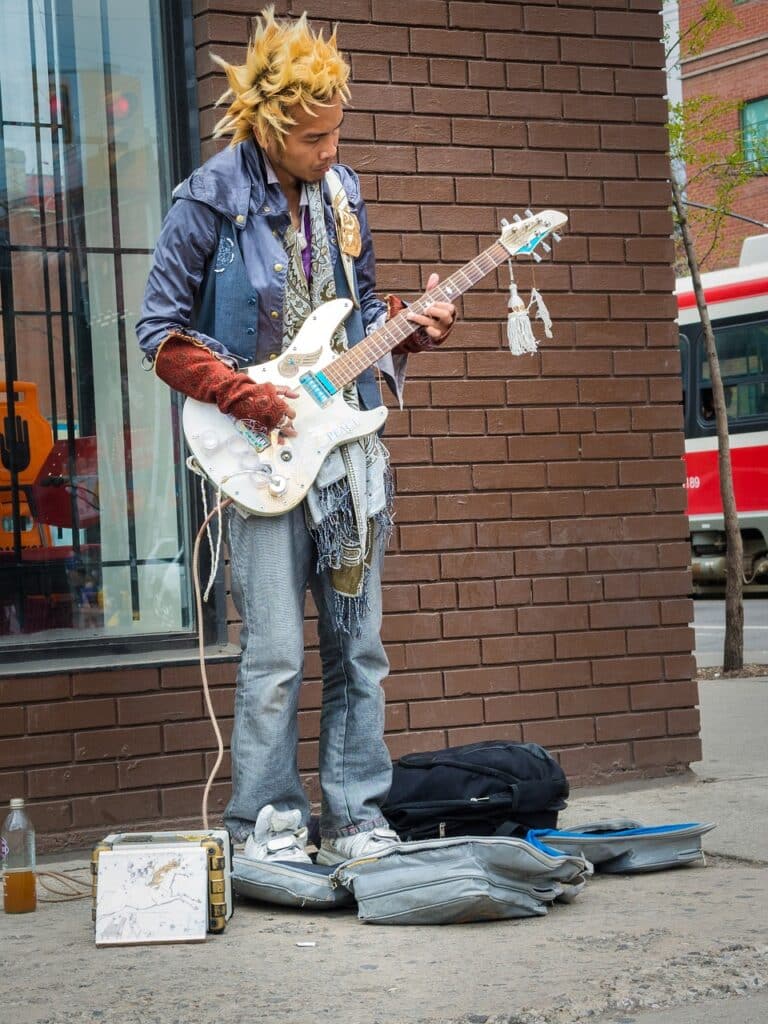
Having a strong look can help you stand out from the crowd.
Sell CDs and other merch
If you have any CDs recorded, or any merch like T-shirts and caps, then busking can be a valuable opportunity to sell them. Make sure you have enough stock with you, but not so much that it becomes a liability.
A small display that is set out in an attractive manner can help you boost your potential earnings.
Have a friend with you
Recruiting a friend to collect the money for you while you perform can help you increase your revenue. If you can find a suitably charismatic individual, they can talk you up, distribute business cards and even sell CDs and other merchandise – all while you are performing.
Having a friend to help you can help increase the amount of money you can earn by busking, as well as being good for your safety and security – especially if you are performing at night.
Prepare something to say at the end of your set
If you manage to draw quite a crowd, then it may be worth preparing something to say about people contributing money at the end of your performance.
Street performers who focus on circus tricks and magic are often highly effective at this – it may be worth trying to take a page out of their playbook.
Busking Q&A: Frank Neil
Location: Chester
For more information: Frank Neil & Blue Wagon (local Chester act)
1. When and why did you start busking?
I started busking around 2012 to advertise our band when we performed locally in Chester.
2. How lucrative have you found busking to be?
It varies from day to day and season to season. Some buskers are dedicated to making a living out of it, and some do very well, but speaking personally I find it an unreliable form of income, so I mainly do it for the experience of learning to play better and meeting interesting people. It’s not a bad day out in the fresh air if you think of it that way.
3. Do you have any advice for anyone looking to start busking?
In Chester, you don’t need a licence, just keep your music to a comfortable sound level because, if you’re too loud, you’ll be asked by some shopkeepers (or even by the Police Community Support Officers) to turn it down. Here’s a link to the busking in Cheshire West & Chester brochure – there’s even a picture of me on harmonica joining another busker that day because all the best spots were taken!
Busking FAQ
Can you make a living as a busker?
Yes, though it requires commitment, consistency, and the right location. Many full-time buskers in major UK cities report earning a viable income, particularly in London, Edinburgh, and other tourist-heavy locations. However, it can be unpredictable — earnings vary greatly by day, season, and weather. Most musicians treat busking as a supplement to other income streams such as gigs, teaching, or studio work rather than a sole source of income.
How long should I busk for?
Most experienced buskers recommend sessions of 1–2 hours at a time. After about an hour, the passers-by who were going to give you money already have, and you start to see diminishing returns. It’s often more effective to take a break and return, or move to a different pitch. That said, if you are drawing a consistent crowd and the earnings are strong, there’s no reason to stop. Listen to the environment rather than the clock.
Is busking income taxable in the UK?
Yes. Any income you earn — including busking — is taxable if it exceeds your personal allowance (£12,570 for the 2024/25 tax year). If busking is a regular source of income, HMRC expects you to declare it as self-employment income via a Self Assessment tax return. If you only busk occasionally and earn small amounts, you’re unlikely to be affected, but it’s always worth keeping records of what you earn and seeking professional advice if unsure.
Is busking classed as begging?
No. Busking is not begging. Begging involves requesting money without offering anything in exchange. Busking involves performing a skill or entertainment in a public place and accepting voluntary donations. The two are legally and socially distinct. In the UK, busking is entirely legal (subject to local licensing rules), while street begging in certain circumstances can fall under the Vagrancy Act or local bylaws.
Do you need a licence to busk in the UK?
In most cases, no. The majority of UK streets and public spaces do not require a busking licence. However, some local councils, transport hubs (notably London Underground), and private property such as shopping centres do require permits. Always check with your local authority before performing. London Underground’s busking scheme, run by TfL, involves a formal audition process and offers designated pitches across the network.
How do you make money from busking? Leave your tips in the comments below.
Share this: