Instagram has become one of the most powerful platforms for musicians to promote their work, connect with fans, and build a following. With over 2 billion monthly active users worldwide, it offers an unrivalled opportunity to reach new audiences — from local gig-goers to fans on the other side of the world.
In this guide, we cover 10 top tips for musicians using Instagram, along with a bonus tip on Reels, a brief history of the app, and some great musician accounts to follow for inspiration. Whether you’re just starting out or looking to sharpen your strategy, read on.
The app has been in existence since 2010, which may seem like an eternity in the fast-moving world of digital marketing and social media. However, many musicians have only taken to using Instagram as a means of self-promotion over the last few years.
Like all social media, there are some good habits to get into to make the most out of the digital photo-sharing app. Below, we’ve compiled a list of dos and don’ts specifically tailored to helping musicians promote themselves on Instagram. We’ve also included a little bit of background on how the app became so popular and some examples of great accounts to follow. Happy snapping!
10 top tips for musicians with Instagram
1. Secure your name
The first thing you need to do is secure your handle as soon as you have a band/artist name. If you are even vaguely considering promoting via Instagram, you want to secure your unique band name before somebody else does! Instagram does have a trademark policy that is worth reading.
While you’re at it, consider setting up an Instagram Business or Creator account. It’s free and unlocks access to analytics (Instagram Insights), the ability to schedule posts via Meta Business Suite, and contact buttons for fans to reach you directly. Creator accounts are generally better suited to individual musicians, while Business accounts work well for bands or music businesses that run paid ads. Either way, switching from a Personal account is free and well worth doing.
2. Do your research
Before you begin posting, look up bands or artists that you consider similar to you. What sort of content is working for them? What hashtags do they use? What is their engagement like? Obviously, don’t just copy anything or use anyone else’s pictures without crediting them, but doing your homework can really help you work out what approach to take and get ahead of the game.
3. Consider whether to sync with Facebook and other platforms
There are two schools of thought on this. For convenience, it is definitely easier to sync your Instagram account with your Facebook page so that any content gets posted on all platforms at once. On the other hand, it’s also generally better to treat each social media platform differently. For example, on Instagram, it’s pretty normal to include lots of hashtags. However, loads of hashtags on Facebook are still a bit of a novelty.
If you have something specific you’d like to promote across all your social media platforms, you can share posts individually without having to permanently sync your accounts.
4. Think about your content breakdown
Much like point three, there are two different approaches to take with the content you post. Larger acts tend to stick to strictly professional posts, as they may have dedicated individuals running their social media. This means you can expect a lot of publicity shots of them performing or possibly pictures of setlists etc.
However, if you’re looking to get more engagement with posts (especially at a grassroots level) a mix of music-related and other entertaining posts may have better results. Adding some personality to your social media can help increase engagement – find out what content works for your audience.
5. Watch how often you post
Interestingly, the regularity of posts on Instagram doesn’t make as much of a difference as it does on other platforms. For example, with a site like Twitter/X, your content has a very short life span and can easily get lost in a busy news feed, unless it goes viral. With Instagram, the quality of content is much more important than posting often. In fact, if you post too regularly, you might end up annoying people and losing followers. That said – this isn’t an excuse to only post every 6 months! Try and find a good balance.
6. Selectively search hashtags to find content for reposting
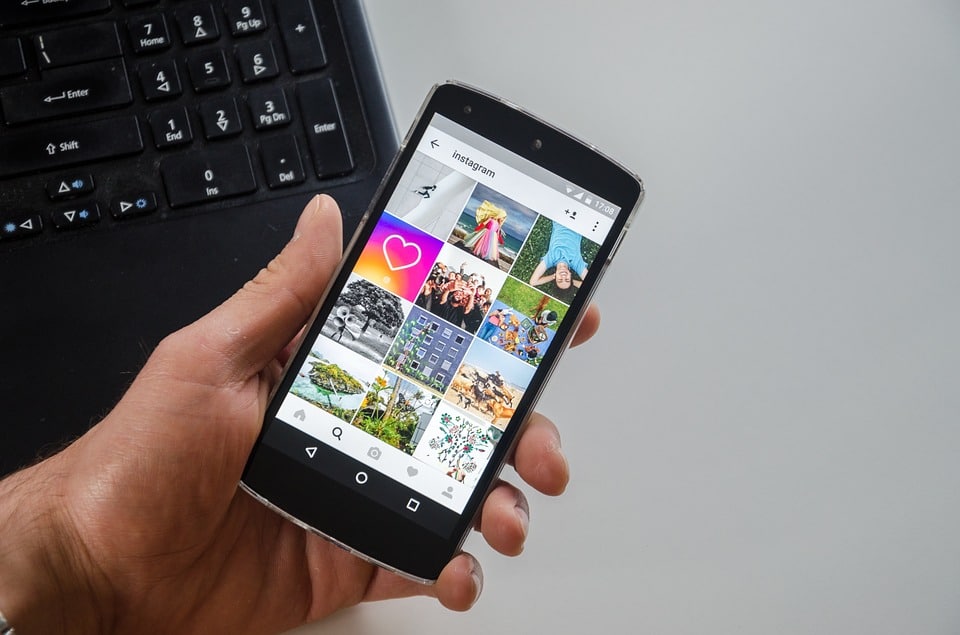
Instagram makes it easy to share other users’ posts. You can reshare any public post directly to your Story, and since 2023, Instagram has a native feed reshare feature (similar to a retweet) for eligible posts.
To share a post to your Story: tap the paper plane icon below a post, then tap Add post/video/reel to your story. The reshare automatically shows the original creator’s handle, so credit is built in.
You can also use your phone’s screenshot feature and crop the image — just remember to credit the post’s original author. For more detail on reposting, see this WikiHow article on reposting on Instagram.
7. Engage with other accounts (comment/like/follow)
By searching relevant hashtags like #livemusic or #weddingband, you can find accounts that are similar to yours. By engaging with them (comment/like/follow) your interaction will appear in their notifications, and there is a chance they will check out your page and follow you. When you do this, try and make sure you have some great content at the top of your page to make people want to stick around. Comments on other accounts will be seen by anyone else on that page, and so can also drive some traffic your way.
8. Try to use a unique engagement rather than copy & paste
While it is tempting to copy and paste a generic comment into photos like “Cool picture!” there are a couple of ways this can hinder rather than help your promotion efforts. First of all, lots of people will instantly see through it. Many of them will already be following other accounts similar to yours, and could see the copied comments! You may also find yourself running into problems with Instagram’s spam filters, which can kick in if you post the same comment too often.
9. Return any engagement
If accounts reply to your comments, see if you can establish some dialogue. Return their comments and likes on your pictures. The more active you are with your followers, the more likely new accounts are to follow you.
10. Use Instagram Insights and analytics
Instagram has its own built-in analytics tool called Instagram Insights, available free on Business and Creator accounts. It shows your reach, impressions, engagement rate, follower demographics (age, gender, location), and which posts performed best — everything you need to refine your content strategy over time.
In your Insights, you can see how many times your posts were circulated via hashtags, which Stories got the most replies, and when your followers are most active online (useful for timing your posts). For third-party scheduling and analytics tools, popular options include Hootsuite, Later, and Sprout Social.
Bonus tip: Embrace Instagram Reels
Instagram Reels are short-form videos (up to 3 minutes) that are actively pushed to the Explore page and shown to non-followers — making them by far the most powerful tool for organic reach on the platform right now. For musicians, Reels are ideal for short performance clips, behind-the-scenes moments, gear demonstrations, song covers, or jumping on trending audio.
The algorithm rewards Reels with a strong hook in the first 1–3 seconds, so lead with something visually or sonically compelling. You can also upload your own original audio, which can then be reused by other creators — a smart way to get your music discovered by new audiences without spending a penny on ads.
10 Accounts to follow
Working Musicians
Emily Dolan Davies – heyemilydrums (The Darkness, Bryan Ferry, Kim Wilde)
Emily is always either on the road or in the studio and has some brilliant IG posts about the artists she works with and life on the road. She’s also built a platform as a career coach for session musicians.
David Ryan Harris – drh3 (John Mayer)
David Ryan Harris is not only an amazing singer-songwriter in his own right, but is also part of the backing band for John Mayer. His IG account and live streams are a great insight into the life of a working sideman and independent artist.
Neil Fairclough – neilmfairclough (Queen + Adam Lambert)
Neil is the bass player for Queen + Adam Lambert. He gets to play some of the biggest venues in the world, with one of the biggest bands in the world, and his IG account should be enough to give every session musician something to aspire to.
Questlove – questlove (The Roots, D’Angelo, John Legend)
Amir Thompson (otherwise known as Questlove or DJ Questlove) is a record producer, session drummer and DJ. As well as working with The Roots (who serve as the house band for The Tonight Show Starring Jimmy Fallon, when they aren’t winning Grammys for their own albums) and other massive acts, he’s done everything from producing Broadway musicals to making records with Al Green. His IG account gives you a snapshot into his world.
Music Industry
Last Minute Musicians – lastminutemusicians
LastMinuteMusicians.com is the UK’s leading live entertainment portal. More than just a directory – it’s the most convenient way to find the right entertainment for live events. For musicians, it represents a fantastic way to get more gigs without having to worry about hefty agency commission.
The Unsigned Guide – unsignedguide
The Unsigned Guide is a great service for making new industry contacts. Their IG account is a great way to learn about new features, interviews and advice articles they have on their site.
The Musicians’ Union – wearethemu
The MU’s Instagram account gives you a snapshot into the work the Musicians’ Union does to represent the rights and interests of its members.
Instrument Demonstration
Joe Bonamassa – joebonamassa
While, of course, Joe could easily be put under the title of a working musician, he also uses his IG account to demonstrate some of his beautiful (and incredibly extensive) guitar collection.
Mark Agnesi – markagnesi & Norman’s Rare Guitars – normansrareguitars
Mark Agnesi is a guitarist and content creator well known for his long-running association with the world-famous Norman’s Rare Guitars store in Los Angeles and his work with Gibson Guitars. He demonstrates incredible instruments on YouTube and Instagram. The Norman’s Rare Guitars IG account also features clips and interviews with both upcoming stars and famous faces, as well as brilliant product demonstrations.
A brief history of Instagram
Kevin Systrom and Mike Krieger founded Instagram in 2010, in San Francisco USA. The idea was originally to develop an app whose main focus was on photo sharing, with built-in preloaded filters and time-limited video. In that sense, Instagram has managed to largely stay true to its original brief.
Fun Fact: The name “Instagram” was created as a homage to the words “Instant Camera” and “Telegram”.
By December of 2010 (barely two months after its launch), Instagram had already amassed more than a million users. In 2011, v2.0 was launched (with more filters) along with the world’s first organised “Instameet”. This was where users met up in their respective areas to go on “photo walks”. Later that same year, the “Hashtag Weekend Project” saw users submitting pictures with a specific hashtag and Instagram sharing their favourites on their profile. The number of users continued to grow and grow. By the end of the year, Instagram was the “iPhone App of the year”.
April 2012 saw some really big changes for the company. Facebook purchased the company, reportedly for around $1 billion in cash and stock options. This saw its user-base jump significantly, as well as added features like photo maps and web profiles. Ellie Goulding released a music video created only using fan-made IG submissions.
By 2013, Instagram had well over 150 million active monthly users. Photos could be embedded on websites, and users could directly message one another. This year also saw the launch of sponsored advertising content.
2016 saw the advent of Instagram “Stories”, where users could temporarily upload pictures and videos that would last for a maximum of 24 hours before disappearing.
Since then, Instagram has continued to evolve rapidly. In 2020, Reels launched as Instagram’s answer to TikTok, quickly becoming the platform’s most powerful organic growth tool. By 2022, Instagram had surpassed 2 billion monthly active users. In 2023, the platform introduced native feed resharing and expanded Reels to a maximum of 3 minutes. Today, Instagram remains one of the most important platforms for musicians — particularly for short-form video content, which now dominates the algorithm.
Do you have any advice for musicians using Instagram? How do you hire musicians for events? Do you have any great accounts you follow? Leave your thoughts in the comments below…
Share this: