The harp is one of the oldest instruments in the world, and it remains one of the most requested for live events in the UK. Its sound carries through a room without dominating it, which makes it well suited to occasions where atmosphere matters but conversation still needs to flow. This guide covers everything you need to know before making a booking: types of harp, what to expect on the day, current pricing, and the practical details that are easy to overlook.
Why hire a harpist?
A live harpist creates something a playlist cannot: a sense of occasion. Guests notice it, often without being able to explain quite why the room feels different. The instrument itself is striking to look at, so even during breaks it acts as a centrepiece.
Harpists are booked most often for wedding ceremonies and drinks receptions, but they work equally well at corporate dinners, afternoon teas, memorial services, and garden parties. The key quality across all these settings is the same: the harp fills a space with music that feels considered and warm, without being intrusive.
Our harpists have performed at events ranging from intimate country house weddings to large-scale corporate functions. A number have played at notable occasions, including the Queen’s 80th birthday celebrations at Balmoral and the King of Thailand’s birthday in Bangkok. That breadth of experience means there is likely a harpist on the platform who is well matched to your event, whatever its scale or style.
Types of harp
Not all harps are the same, and the type your harpist plays affects both the sound you get and what the booking involves logistically.
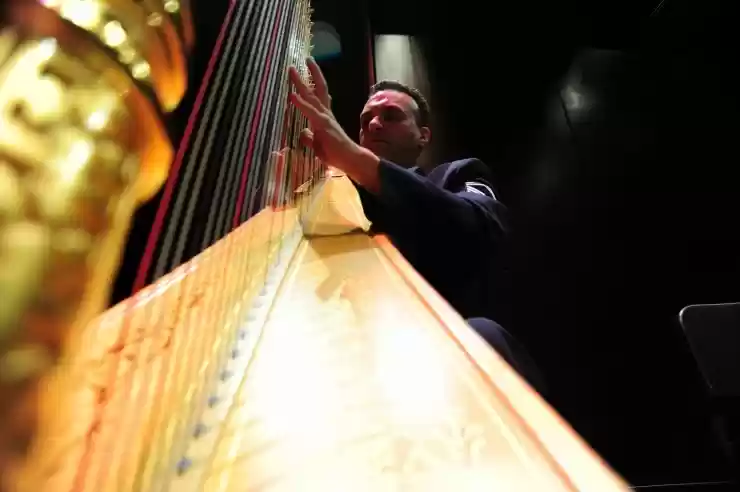
- Pedal harp (concert harp): The large, full-sized instrument you would expect to see in an orchestra. It has a rich, resonant sound and a wide tonal range, making it the best choice for classical repertoire and most formal settings. The trade-off is size. A pedal harp is heavy, needs careful transport, and requires good parking and step-free access to the performance area.
- Lever harp (Celtic harp): Smaller and lighter, the lever harp is easier to move and fits into tighter spaces. Its tone is warm and bright, and it suits folk, Celtic, and lighter classical music particularly well. For intimate venues or events where space is limited, a lever harp is often the more practical option.
- Electric harp: A niche choice, but a growing one. Electric harps can be amplified and used with effects or loops, which opens up possibilities for modern, ambient, or crossover performances. They suit contemporary events and settings where a more unusual sound is welcome.
Some harpists play more than one type and can advise which suits your venue and the sound you are after. A small number also sing while they play, which adds another dimension for certain settings.
How much does it cost to hire a harpist?
Based on current listings on Last Minute Musicians, harpist prices range from around £70 to £1,029, with an average booking price of £344. Most standard wedding bookings of one to two hours fall in the £250 to £500 range.
Several factors affect where a quote sits within that range:
- Travel distance: Most harpists charge travel costs on top of their performance fee, particularly for longer distances. A musician based in London travelling to a rural venue will typically include a fuel or mileage surcharge.
- Length of performance: A ceremony-only booking of one hour costs less than a combined ceremony and drinks reception booking of two to three hours. Always be clear about what you need when you enquire.
- Time of year: Peak wedding season runs from May to September, and Saturdays in summer are the most sought-after dates. Expect prices to reflect that demand.
- Type of harp: Pedal harp specialists may charge more than lever harp players, partly because transporting a full concert harp involves considerably more effort and logistical complexity.
- Bespoke song requests: Most harpists are happy to learn a specific song on request, but this often comes with an additional arrangement or learning fee. The amount varies by performer, so it is worth asking upfront.
Very cheap quotes under £150 usually indicate a student or semi-professional rather than someone with extensive event experience. That is not necessarily a problem for an informal occasion, but for a wedding or high-profile corporate event it is worth understanding what you are getting. At the other end, higher quotes often reflect significant professional credentials, competition-level playing, or a harpist with a strong track record at premium events.
You can browse current harpist prices and availability on Last Minute Musicians to compare performers and see live pricing.
Harpists at weddings
Weddings account for the majority of harpist bookings, and for good reason. The instrument fits naturally into the different phases of a wedding day, from the quiet moments before the ceremony through to the noise and laughter of a drinks reception.
When in the day to book a harpist
A harpist can cover several distinct slots in a wedding day:
- Guest arrival: The harpist plays as guests take their seats before the ceremony begins. This sets the tone before a word has been said.
- Processional: The music that accompanies the wedding party walking down the aisle. This is usually a single piece agreed in advance, often one of the most requested moments in the booking.
- Signing of the register: Typically two or three pieces played while the legal part of the ceremony takes place.
- Recessional: The couple walk back up the aisle. Often a more uplifting piece than the processional.
- Drinks reception: Background music during the post-ceremony drinks and canapes. Usually the longest solo performance slot of the day, lasting an hour to ninety minutes.
- Wedding breakfast: Less common, but some couples choose to have background harp music during the meal itself.
Most couples book for the ceremony plus the drinks reception, giving the harpist a total playing time of two to three hours. A ceremony-only booking is usually one to one and a half hours.
How long harpists play
The standard format is 45 to 50 minutes of music followed by a 15-minute break, then another set. Harpists need these breaks to rest their hands and retune the instrument, particularly in warm rooms where the strings shift more quickly. A full three-hour booking will typically include three sets with two breaks. Build this into your day’s schedule when planning timings with your venue coordinator.
Popular wedding songs for harp
Most harpists maintain a broad repertoire covering classical standards and contemporary pop arrangements. The following are among the most requested pieces at weddings:
- Canon in D (Pachelbel)
- Clair de Lune (Debussy)
- Ave Maria (Schubert or Gounod)
- Jesu, Joy of Man’s Desiring (Bach)
- A Thousand Years (Christina Perri)
- Can’t Help Falling in Love (Elvis Presley)
- Songbird (Eva Cassidy / Fleetwood Mac)
- The Flower Duet from Lakme (Delibes)
- Somewhere Over the Rainbow
- Game of Thrones theme
If you have a specific song in mind that is not on a harpist’s standard list, it is worth asking. Many will learn a piece on request, though an arrangement fee may apply and you will need to allow sufficient notice, typically at least four to six weeks.
Ceremony logistics
In a church, the harpist will usually set up to one side of the chancel, near the front but out of the main sightline for the ceremony. In a civil venue such as a hotel or licensed barn, positioning is more flexible and can be agreed with your venue coordinator beforehand.
For groups up to around 150 guests, a full concert harp does not need amplification. For larger events, some harpists bring a pickup or microphone system, but confirm this when you enquire rather than assume it is available.
Outdoor ceremonies need careful planning. Most harpists are willing to play outside but will have conditions: shade is essential (direct sunlight damages the instrument and makes tuning unpredictable), the surface needs to be hard and flat (grass alone is not suitable), and there needs to be a contingency if rain is possible. Raise this early in the booking process so you can plan accordingly.
For a full range of musicians suited to wedding ceremonies, see wedding ceremony musicians and wedding musicians on Last Minute Musicians.
Harpists at corporate events, parties and other occasions
Outside of weddings, harpists are a popular choice for corporate dinners, awards ceremonies, drinks receptions, and afternoon teas. The instrument creates a sophisticated background ambiance without competing with conversation, which is exactly what you want at a networking event or client function. Guests can talk freely without needing to raise their voices, yet the music is noticeable enough to raise the quality of the event.
Harpists are also regularly booked for garden parties, private birthday celebrations, and memorial services. For funerals and memorial services in particular, the harp has a long association with quiet, dignified music and is often specifically requested by families who want something more personal than a recorded playlist.
What to check before you book
- Listen to audio and video samples: Every harpist listed on Last Minute Musicians has recordings on their profile. Listen to them before you enquire. Two harpists at similar price points can sound very different, and playing style matters as much as technical ability.
- Check the repertoire: A classical concert harpist and a Celtic/pop crossover performer are suited to quite different events. Confirm their musical range matches what you need before getting into the details of the booking.
- Read reviews: Last Minute Musicians has over 1,300 verified reviews of harpists, rated 5 out of 5 on average. Read harpist reviews here. Real feedback from couples and event organisers is the most reliable guide to what a performer is actually like to work with on the day.
- Confirm venue logistics: Check that there is parking close to the entrance (harps need to be wheeled in on a trolley), a flat and accessible route from the car to the performance area, sufficient space to set up (roughly 2m x 2m as a minimum), and a power supply if amplification is needed.
- PLI insurance: All professional musicians should carry Public Liability Insurance. Most wedding and corporate venues require a PLI certificate before allowing a performance. Confirm this is in place before finalising the booking.
- PAT testing: If the harpist brings any electrically powered equipment, some venues will require a PAT certificate confirming it has been tested for electrical safety. Worth checking with your venue in advance.
- Dress code: Most harpists dress formally as standard, but if your event has a specific dress code or theme, let them know.
Venue considerations
On outdoor events: most harpists prefer to play indoors and will have stipulations if asked to perform outside. Direct sunlight causes the strings to expand unevenly, making tuning very difficult to maintain. Humidity from rain has a similar effect. If you are planning an outdoor ceremony, you will need to provide shade (a gazebo or the overhang of a marquee works well), a hard and flat surface, and a contingency plan in case of bad weather.
On sound and volume: a concert harp projects well acoustically in most spaces without amplification for groups up to around 150 guests. For larger events, or in venues with high background noise levels, some harpists carry a pickup system or can arrange to work with the venue’s PA.
On access: harps are large and heavy, typically transported on a purpose-built trolley. Steep steps, narrow doorways, gravel paths, and long distances from parking to the performance space can all cause problems. Share the venue layout with the harpist before the booking is confirmed so there are no surprises on the day.
On sound limiters: many barn and country house venues operate sound limiters to manage noise levels. A harp is almost always well within the limits, as it is naturally acoustic.
How far in advance should I book?
For weddings, particularly on peak Saturdays between May and September, it is worth booking as early as possible. Popular harpists are often confirmed six to twelve months in advance for prime dates. If you have a date in mind, searching sooner rather than later gives you the widest choice of performers.
That said, last-minute bookings are also possible. Last Minute Musicians is specifically set up to handle short-notice enquiries, and availability does come up even at busy times of year. You can check real-time availability of harpists for hire directly on the platform.
Frequently asked questions
How much does it cost to hire a harpist in the UK?
Current listings on Last Minute Musicians show harpist prices ranging from around £70 to £1,029, with an average of £344. Most wedding bookings of one to two hours fall in the £250 to £500 range. Prices vary based on location, performance length, time of year, and the harpist’s level of experience. See current harpist prices and availability here.
Do harpists bring their own harp?
Yes, always. Your harpist will arrive with their own instrument, a performance stool or bench, and any music they need. You do not need to source or hire a harp separately.
Can a harpist play outdoors?
With the right conditions, yes. The key requirements are shade from direct sunlight, a hard and flat surface (not grass), and protection from rain. Most harpists are willing to play outdoors but will specify conditions in advance. If there is any chance of bad weather, have a contingency plan ready.
Can harpists learn a specific song?
Usually yes, given enough notice. Most harpists are willing to learn a song not already in their repertoire, but an additional arrangement fee may apply. You will typically need to give at least four to six weeks’ notice. It is always worth asking when you enquire.
What is the difference between a pedal harp and a Celtic harp?
A pedal harp (concert harp) is the large, full-sized instrument with a rich, orchestral sound, best suited to classical and contemporary repertoire. A Celtic harp (lever harp) is smaller and lighter, with a warmer, brighter tone, better suited to folk, Celtic, and lighter classical music. Pedal harps are more common at formal events; lever harps work well where space is limited or the repertoire leans toward folk and traditional styles.
How long do harpists play for?
Most harpists play 45 to 50 minutes per set, followed by a 15-minute break. Total booking lengths typically range from one hour (ceremony only) to three hours (ceremony plus drinks reception). Always confirm the expected format and number of sets when you make an enquiry.
Do I need to provide amplification?
For most events under around 150 guests, no. A concert harp is loud enough to fill a typical venue without additional amplification. For larger events, or in noisy outdoor settings, some harpists have their own pickup or microphone system. Check with the harpist directly if you are unsure whether your venue would need it.
If you are considering other classical instruments for your event, you might also want to look at string quartets, classical singers, pianists, and violinists on Last Minute Musicians.