
Last updated: March 2026
Learning a musical instrument can provide many benefits. From increasing memory capacity to enhancing coordination, teaching discipline and responsibility to self expression and creativity, taking the time to learn a musical instrument can be an incredibly worthwhile activity for both children and adults.
However the cost of music tuition can be prohibitive, as musicians endeavour to walk the fine line of making a living, whilst not scaring away potential customers.
The BBC have reported that some 76% of children aged five to 14 told researchers they knew how to play an instrument, a figure that had increased significantly on previous years.
Clearly the appetite for music lessons is there, but many parents or individuals are often confused about how much they should be paying.
The question is how to strike a balance between charging a fair price for music tuition and allowing families from all backgrounds to be able to afford to allow their child to learn a musical instrument.
How do musicians decide what to charge?
When selecting a music teacher, it is important to remember what you are paying for. You want to have (or provide for your child) lessons that are safe, fun and informative. If you want your child to be successful in their studies, then it may well be worth investing some money in an experienced teacher.
In 2014, the BBC reported on a survey carried out by the Incorporated Society of Musicians shows that the average cost of music teachers is £30 per hour. Rates have risen since then, and in 2026 most private music teachers in the UK charge between £20 and £50 per hour, depending on experience, location and the instrument taught.
Musicians who teach privately are generally expected to hold public liability insurance and, if teaching children, a DBS check. These are considered best practice (and often required by schools or venues), and the associated costs are typically passed on to students.
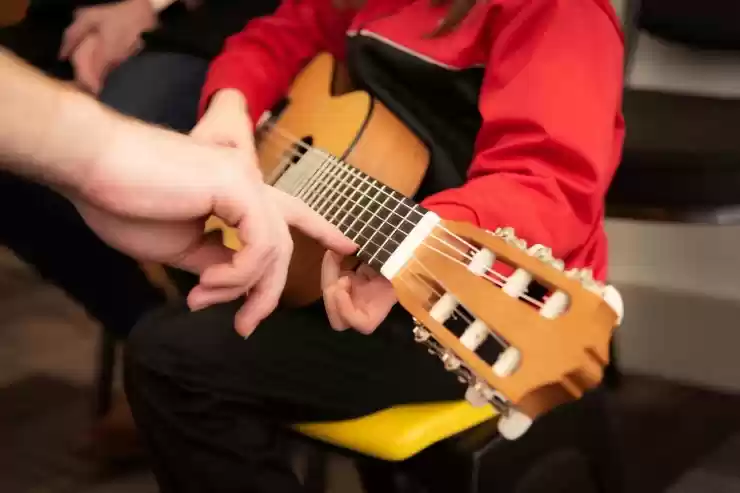
However, there are many other factors that might go into what they charge, such as their previous experience and travel costs.
Views from music tutors
Guitar teacher Richard Hillyer says,
I charge £25 an hour and £15 half an hour teaching guitar. I’m a mobile teaching service so travel to my students houses. This price includes travel costs up to a certain area. I’m open to group lessons and have taught in that environment before in a school but I can’t say it’s been a popular question people ask me, one to one in my opinion is the way to go.
Richard Hillyer
Another music teacher, Aaron Liddard says:
I charge £50 per hour. Contrary to what many musician expect, people are prepared to pay for quality teaching. Moreover, we are programmed to believe that cost is indicative of value. As a professional in the prime of his career with mainstream credits, a relevant degree and teaching qualification, it would be remiss of me to charge competitively: where would that leave tutors at the start of their career?
Aaron Liddard
He goes on to explain,
Most of my students are looking for a tailor-made experience with someone they can trust and who’s music they respect. For the few enquirers who think in pure £ value, I draw their attention to the hourly rates if any other trained 1-2-1 service provider: plumbers, hair dressers, swimming coaches, PTs, osteopaths…. For all of which £50ph is very competitive. I also tell them they most of my students get enough from one lesson to last more than a week, so unless they need weekly interaction in order to be diligent, studying with me will be more efficient. If people can prove they’re on a lower income than me then I offer discounts and would be happy to offer free lessons to a gifted kid from a penniless family.
Aaron Liddard
Note: The rates quoted above were provided in 2020 and may not reflect current pricing. Music tuition costs vary widely depending on the teacher’s experience, qualifications, location and the instrument being taught.
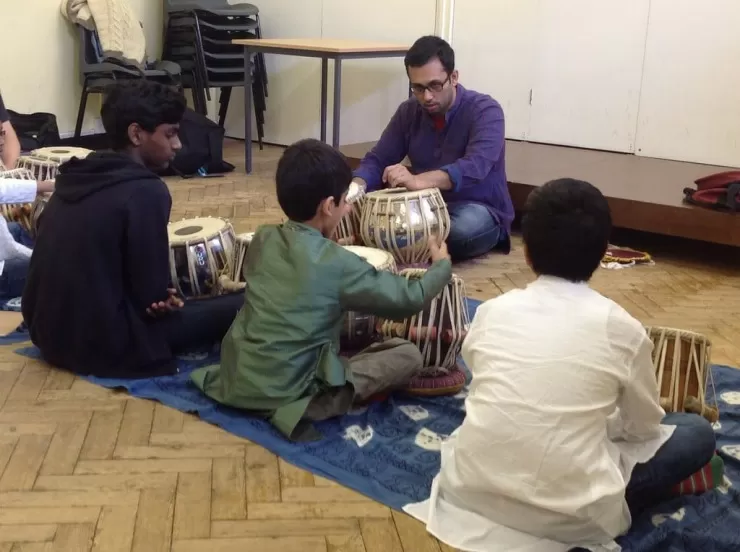
Online vs in-person music tuition costs
The growth of online learning has opened up more affordable options for music students. Online music lessons are often cheaper than in-person tuition, typically saving 10-20% on the hourly rate, as the teacher has no travel costs or room hire to factor in. If you are a musician considering offering lessons remotely, our guide on how to set yourself up as an online music teacher covers everything you need to get started.
In-home tuition, where the teacher travels to the student, usually commands a premium of £5-£10 per session to cover travel time and expenses. Lessons at the teacher’s own studio or home tend to fall somewhere in between.
Tips on keeping music tuition costs down
Whilst one-to-one musical tuition is undoubtedly the best way to learn an instrument, innovations such as YouTube and music educational video games have allowed those who are not able to afford regular private lessons to still “top up” their instrumental tuition at home, in between professional tuition sessions.
Nevertheless, to bridge the gap between learning how to play a few guitar chords and playing in the National Symphony Orchestra, there must be some one to one tuition where the musician is able to continue learning and understand which career paths are available.
Other top tips:
- Organise group lessons, allowing for one teacher to tutor a group of musicians with a similar ability.
- Taking lessons through educational institutions, which often subsidise tuition costs.
- Use online music tuition, and 21st century educational tools alongside professional music tutors. For more detailed advice, see our complete guide to music lessons for students.
- Look to your local authorities’ provision of music lessons, potentially within the school environment.
Poll Results: Should music tuition be subsidised?
Reader Poll Results – 63 voters
71% of voters said music tuition should not be subsidised by government or educational institutions
Our reader poll asked whether music tuition should be subsidised by educational or government institutions. The majority of respondents (71%) said no, suggesting that most musicians and music students believe the market should set tuition rates, rather than relying on public funding.
Do you think the cost of music tuition is too high? Should tuition be subsidised by government or educational institutions? Let us know your thoughts in the comments below!