
Last updated: April 2026
Musicians make a lot of noise. Whether you’re rehearsing with a band, practising scales at 11pm, or tracking vocals in a spare bedroom, the sound you love is often the sound your neighbours, flatmates and family dread. Soundproofing fixes that. It keeps your music in, keeps the rest of the world out, and lets you play with the freedom you need to actually get good.
This is the complete guide to soundproofing for musicians. We cover the science of how sound moves, the four principles every soundproofing project relies on, step-by-step techniques for any budget, instrument-specific advice, UK noise laws, and the common mistakes that waste money and achieve nothing. By the end you’ll know exactly what to buy, where to install it, and how much quieter it’ll actually make your space.
Soundproofing vs Acoustic Treatment: What’s the Difference?
This is the single most important distinction to understand before spending a penny, and it’s the one most musicians get wrong. Soundproofing and acoustic treatment are not the same thing, and they solve completely different problems.
Soundproofing stops sound from travelling between two spaces. It’s about keeping your guitar amp from reaching the neighbours, or stopping traffic noise from ruining your vocal takes. Soundproofing requires mass, density and structural separation. It’s expensive, physically intensive, and almost always involves construction.
Acoustic treatment shapes how sound behaves inside a room. It tames reflections, flutter echoes, standing waves and reverb so that what you hear (and what your microphones capture) is clean and accurate. Acoustic treatment uses relatively lightweight panels, bass traps and diffusers, and it’s much cheaper and easier to install.
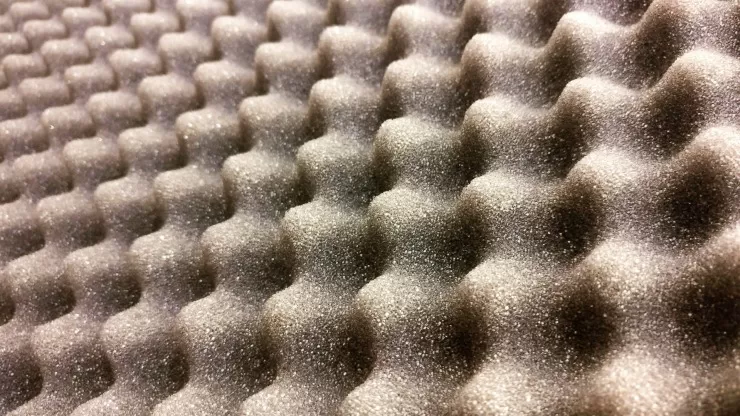
Those foam tiles you see stuck to bedroom walls on Instagram? That’s acoustic treatment, not soundproofing. They make your room sound better on a recording, but they do almost nothing to stop sound leaving the room. If your main problem is angry neighbours, foam alone will not save you.
Most musicians need a bit of both. Figure out which problem you actually have before you spend anything.
The Four Principles of Soundproofing
Every soundproofing technique, no matter how fancy or expensive, works by applying one or more of these four principles. Understand them and you can evaluate any product or approach on its merits.
1. Mass
Heavy, dense materials are harder to vibrate, which means they transmit less sound. This is why brick walls block noise better than stud partitions, and why adding a second layer of drywall is one of the most effective upgrades you can make. Mass loaded vinyl (MLV), extra plasterboard and heavy curtains all work on this principle.
2. Damping
Damping converts sound vibration into tiny amounts of heat, killing it before it can pass through a structure. Green Glue is the classic damping compound for musicians: a viscoelastic product sandwiched between two sheets of drywall that absorbs bass frequencies which mass alone struggles to block.
3. Decoupling
If two structures touch, sound passes directly between them via vibration. Decoupling physically separates them. Resilient channels, isolation clips, floating floors and the classic “room within a room” build are all decoupling techniques. For drummers and bass players, decoupling is often the only approach that actually works at low frequencies.
4. Absorption
Porous materials like mineral wool, rockwool and acoustic foam absorb sound energy inside wall cavities and inside the room itself. Absorption is the main mechanism behind acoustic treatment, and it’s also used inside wall assemblies to stop cavity resonance.
How Much Soundproofing Do You Actually Need?
Here’s a useful rule of thumb: reducing the noise leaving a room by 10 decibels makes it sound roughly half as loud to a listener outside. A 20dB reduction sounds about a quarter as loud. Getting your electric guitar amp down by 20dB is realistic with a modest budget. Getting a full drum kit down by 40dB, so your neighbours literally can’t hear it, is a construction project.
Different instruments produce wildly different volumes. A violin or flute peaks around 85-95dB. An acoustic guitar is similar. Loud singing can hit 100dB. An electric guitar through a cranked valve amp is easily 110dB. A drum kit played hard can exceed 120dB, which is louder than a chainsaw.
Bass frequencies are the real enemy. Low frequencies carry further, pass through walls more easily, and require much more mass and decoupling to block. If you mainly play acoustic instruments or sing, simple gap-plugging and curtains might be enough. If you play drums, bass guitar or amplified guitar, you’ll need to take things much further.
Step 1: Plug the Gaps (Your Cheapest Wins)
A lot of sound escapes through door gaps, window seals and small cracks you’d never notice. Sealing these is the cheapest, fastest, most effective thing you can do, and it should always be your first move. Walls block sound far better than a 5mm gap under a door.
Add a door sweep to either side of your practice room door to cut down on sound travel under the door. Hang thick curtains over windows, or seal leaks with budget-friendly foam weather stripping or professional-grade acoustic sealant around the frames. Don’t forget about your heating and cooling ducts either; line them with soundproof duct liner to further reduce noise, or fit acoustic vent covers if you can live without airflow during sessions.
Heavy acoustic-dampening blackout curtains are widely available online for a reasonable price. Take a look at the reviews for each one to decide which is the most effective at reducing unwanted sound, and pay particular attention to weight per square metre: heavier is better.
Keyholes, letterboxes, plug sockets mounted back-to-back on a shared wall, and the gap where a pipe enters the room are all sound leaks most people miss. A £5 tube of acoustic caulk will deal with most of them in an afternoon.
Step 2: Deaden the Space (Acoustic Treatment)
If you choose a space with hard surfaces such as granite countertops or hardwood floors, your sound will reflect through the room, bouncing again and again off the surfaces until it runs out of energy. That’s fine for a live rock gig but awful for recording, practising or just listening properly. Cut down on reflection with carpeting or thick rugs, and consider hanging some material from the walls. Also think about installing soundproof curtains around the perimeter of the room or tacking up vinyl or acoustic insulation panels.
Avoid cheaper solutions like adding mattresses or egg crates to the walls. These are ugly and do not work. The egg-box myth refuses to die but the shape is wrong, the material is wrong, and the density is wrong. Proper acoustic treatment foam is available online for not much more money, and it actually does the job.
Focus your treatment on the first reflection points (the spots on the walls where sound bounces from your instrument or speakers straight to your ears) rather than plastering every square inch of wall. You can find these using the mirror trick: sit where you play, have a friend slide a mirror along the wall, and mark every spot where you can see your instrument or speaker in the mirror. Those are the spots that matter.
Bass traps in corners are also essential for any room where bass frequencies matter. Bass energy piles up in room corners, and untreated corners are the main reason home studios sound muddy. If you have any friends or contacts who work in soundproofing or studio design, they’ll happily tell you the same thing.
Step 3: Add Mass to Walls, Ceilings and Floors
Once gaps are sealed and the room is acoustically tamed, the next step for serious soundproofing is adding mass to the building fabric itself. This is where costs start to climb but the results also become dramatic.
Mass loaded vinyl is a heavy, flexible sheet material designed specifically for soundproofing. It can be stapled to stud walls before a second layer of drywall goes on, or laid under flooring. Adding a second layer of 15mm plasterboard with Green Glue damping compound between the layers is one of the most cost-effective wall upgrades for a musician working within a standard stud wall.
Ceilings leak sound upstairs just as walls leak it sideways. If you’re in a flat, treating the ceiling matters more than you’d think. Resilient bars hung from joists, then drywall with Green Glue, is the standard approach. If ceiling construction is off the table, thick rugs in the room above (if you can arrange it) make a surprising difference.
Floors are frequently overlooked. Footfall, the thump of a bass amp cabinet and the kick drum’s impact all travel straight down into joists. A floating floor (acoustic underlay topped with a second layer of subfloor) decouples the floor from the joists and is the gold-standard fix. A thick rug with dense underlay is a poor-man’s version that still helps with mid and high frequencies, though it won’t do much for kick drum thump.
Pricing for soundproofing materials varies considerably depending on supplier, room size and whether you’re doing the work yourself. Treat any figures in this guide as rough illustrations and get quotes for your specific project.
Step 4: Choose Your Location Carefully
Be smart about where you choose to play your music. Avoid shared walls wherever possible. An interior room with cupboards or bookcases on every wall is already partially soundproofed simply because of the mass of the contents. Consider installing a false ceiling to add some extra relief for your neighbours above. Also consider replacing hollow doors with solid, heavy core ones and, if you have space, investing in an outdoor shed or garden studio.
While it can get expensive, there are many professional consultants and companies that can soundproof areas of your home, or even build specific soundproof rehearsal rooms and drum booths in gardens, sheds and outbuildings. A well-built garden studio is often cheaper than renovating an internal room to the same standard, because you’re starting with a dedicated structure rather than retrofitting around existing walls.
If you’re renting and can’t make structural changes, consider freestanding isolation booths for vocals, or portable vocal shields that clamp to a mic stand. They’re not a substitute for a treated room but they can turn a noisy bedroom into something usable for recording.
Creating a Personal Recording Studio
If you have a spare room, why not turn it into a simple recording studio? Along with the soundproofing tips above, which will keep noise from escaping, focus on acoustic treatment options too. These will ensure that the music that stays in sounds as good as possible on your recordings. Here are a few tips and tricks to keep in mind.
- Don’t get rid of all sound reflection. Leave a couple of spots open and treat them with diffusers. This preserves the natural frequency response of your music instead of making the room sound artificially dead.
- Keep electrical equipment like amps as far away from microphones as possible to avoid feedback and hum.
- Make sure you have plenty of outlets with proper wattage available for use in the studio, ideally on separate circuits to keep noisy equipment like computers away from sensitive audio gear.
- Trap low-end sound with bass traps. Install a few throughout your studio to dampen lower frequencies, especially in corners.
- Make sure your studio has enough room to accommodate the number of musicians you expect to play in the space. If you plan to host other artists, this makes it easier to arrange recording stations and capture the best sound.
- Ensure your equipment is sized for your space. This allows more room to move around and fewer hard surfaces for sound to bounce off. If it’s appropriate and affordable, try using compact equipment.
- Set up a monitoring position away from the back wall and not in the centre of the room, to avoid the worst bass build-ups.
Instrument-Specific Soundproofing Tips
Different instruments create different soundproofing headaches. Here’s how to tackle the most common ones.
Drums
Drums are the hardest instrument to soundproof because of the combination of extreme volume, low-frequency energy and physical impact travelling through floors. Electronic kits with mesh heads and good headphones are the simplest solution for flats. For acoustic kits, a drum riser (a plywood box filled with rockwool) decouples the kit from the floor and is essential. Low-volume cymbals and mesh heads on an acoustic kit can cut volume by around 80%.
Electric Guitar and Bass
A cranked valve amp is the other really hard instrument to control. Smaller practice amps, power soaks, load boxes with cab simulators, and silent recording through an audio interface all let you get the sound you want at sensible volumes. For live amplified playing, isolation cabinets (amp-in-a-box) contain almost all the sound. Many professional guitarists working from home studios now record with load boxes and amp simulation rather than mic’ing a cab, simply because it’s the only way to work without driving everyone around them mad.
Vocals and Acoustic Guitar
Vocals and acoustic instruments are the easiest to soundproof because they produce less bass energy. Thick curtains, bookshelf walls and a portable reflection filter can be enough to get usable recordings in a bedroom. Most vocalists and singers working from home use a small treated corner rather than an entire treated room, and this works well because the human voice sits in a frequency range that’s relatively easy to control. The same approach works for singing guitarists tracking both voice and acoustic guitar.
Strings
Solo string instruments produce moderate volumes but a lot of high-frequency detail, so they need careful acoustic treatment as much as soundproofing. Violin and fiddle players often don’t need bass traps but benefit hugely from diffusers and well-placed absorption panels to tame the room’s top end. Electric violins with headphone monitoring are a neat workaround for late-night practice.
Brass and Saxophone
Brass and saxophone are loud, directional and bright. Playing into a corner with absorption directly in front of you cuts perceived volume significantly, and practice mutes exist for trumpet, trombone, French horn and tuba. Saxophonists can use the SaxMute or a similar device to drop the volume by 10-15dB, which is usually enough to practise at home without complaints. Beyond mutes, mass-added walls and heavy curtains work well because brass lacks the extreme low-end energy of drums or bass guitar.
Soundproofing on a Budget: What You Can Achieve at Every Price Point
Under £100: The Absolute Basics
Door sweep, weather stripping, acoustic caulk, a heavy rug and a pair of thick curtains. This won’t transform a bedroom into a recording studio but it’ll noticeably reduce leakage and tame the worst of your room’s reflections. A sensible starting point for anyone playing acoustic instruments or singing.
£100 to £500: Meaningful Treatment
Add proper acoustic panels at first reflection points, two or four corner bass traps, a portable vocal reflection filter, and upgrade the door to a solid core unit with good seals. At this level you can record usable vocal and acoustic tracks and noticeably reduce what your neighbours hear.
£500 to £2,000: Serious Treatment, Light Soundproofing
Full acoustic treatment package, mass loaded vinyl on the problem wall, a second layer of drywall with Green Glue, and a drum riser if you’re a drummer. This is the sweet spot for most home musicians and can get you close to a decent commercial small studio, provided you aren’t playing drums or cranked amps.
£2,000 and up: Proper Soundproofing
Now you’re talking about room-within-a-room builds, floating floors, resilient channels, decoupled ceilings and professional-grade acoustic doors. This is what you need if you’re running a drum room, a rehearsal space for a loud band, or a commercial-grade tracking room. Consider hiring an acoustician at this level, because mistakes are expensive.
UK Noise Laws and Neighbour Considerations
If you live in the UK, your local council has powers under the Environmental Protection Act 1990 to investigate noise that qualifies as a “statutory nuisance”. This covers excessive, unreasonable noise, not just noise made at night. Repeated complaints can lead to a Noise Abatement Notice, and breaching one is a criminal offence carrying fines up to £5,000 for an individual. Local authorities generally treat loud music from dwellings seriously once complaints are logged.
In practice, most neighbour disputes never reach the council if you’re proactive. Tell your neighbours you’re a musician, ask what hours cause them the least hassle, and stick to them. Offer your mobile number so they can text you rather than stewing. A bottle of wine at Christmas goes further than any amount of mass loaded vinyl. If you rent, check your tenancy agreement: many standard contracts prohibit amplified instruments entirely, and you don’t want to discover that after buying a drum kit.
If you’re on good terms with neighbours, ask them to knock on your door when it’s too loud rather than going to the council. You’ll almost always get more latitude from a neighbour you’ve met than from one who’s only ever heard you through a wall.
Common Soundproofing Mistakes to Avoid
- Sticking foam to walls and calling it soundproofing. Foam is for acoustic treatment, not for blocking sound. If you want to stop noise escaping, foam alone will not help.
- Ignoring the floor and ceiling. If sound is leaving through the walls, it’s almost certainly leaving through the floor and ceiling too. Treat them all or you’re wasting money.
- Forgetting about flanking paths. Sound travels around soundproofing, not just through it. A beautifully soundproofed wall with a shared air vent, chimney or service riser is still going to leak.
- Using egg boxes or old mattresses. They don’t work. The egg-box myth has lived on for decades because they look acoustic, but they offer almost no absorption or blocking.
- Soundproofing without measuring first. A cheap sound level meter app on your phone will tell you where you’re starting, so you can check whether your investment is actually doing anything.
- Trying to block bass with thin materials. Low frequencies need mass and decoupling. Nothing thin or light will block them, no matter how many layers you use.
- Leaving air gaps around the door. The single biggest leak in most rooms is the door. Fix the door first.
Soundproofing FAQs for Musicians
Does acoustic foam block sound from leaving a room?
No. Acoustic foam absorbs mid and high frequencies inside a room to reduce reflections, but it has almost no effect on sound travelling through walls. To block sound you need mass, damping and decoupling, not foam.
What’s the cheapest effective way to soundproof a room for music?
Seal the gaps. A door sweep, weather stripping around the door frame, acoustic caulk around windows and sockets, and heavy curtains will give you the best return on investment of any soundproofing spend under £100.
Can you soundproof a room without construction?
Partially. You can seal gaps, hang heavy curtains, add rugs and bookshelves, and use portable isolation shields. You cannot achieve full isolation (enough to play drums without neighbours hearing) without structural work or a purpose-built enclosure.
Do soundproof curtains actually work?
Yes, for their purpose, but don’t expect miracles. Heavy acoustic curtains reduce sound transmission through windows and also help absorb reflections inside the room. They won’t stop bass and they won’t turn a bedroom into a recording booth on their own, but they’re a worthwhile part of a layered approach.
How do I soundproof a room for drum practice?
Drums are the hardest case. Use a drum riser to decouple from the floor, add mass to walls and ceiling, seal every gap, use low-volume cymbals and mesh heads, and consider a room-within-a-room build for serious isolation. Many drummers end up switching to electronic kits for home practice because acoustic soundproofing to drum-blocking standards is so expensive.
Is it worth paying a soundproofing consultant?
For budgets over around £2,000, yes. A consultant will stop you wasting money on the wrong approach, design a solution that hits your noise-reduction target, and recommend materials you might not have heard of. For smaller budgets the DIY approach is fine.
Final Thoughts
Good soundproofing isn’t magic, but it isn’t really a DIY afternoon job either. It’s a layered approach: seal the gaps, treat the room, add mass where it matters, decouple the structure if you play loud instruments, and talk to your neighbours. Get those five things right and almost any musician can build a practice or recording space they’ll actually want to spend time in.
Start with the cheapest wins, measure what you’ve achieved, and only spend more if you need to. Most musicians massively over-treat the easy problems and under-treat the hard ones. Fix the door, plug the gaps, add some proper panels at the first reflection points, and you’ll be surprised how much better things sound (and how much quieter the rest of the house gets) before you’ve even started on the expensive stuff.
Do you have your own top soundproofing tips? Leave them in the comments below.