
Last updated: March 2026
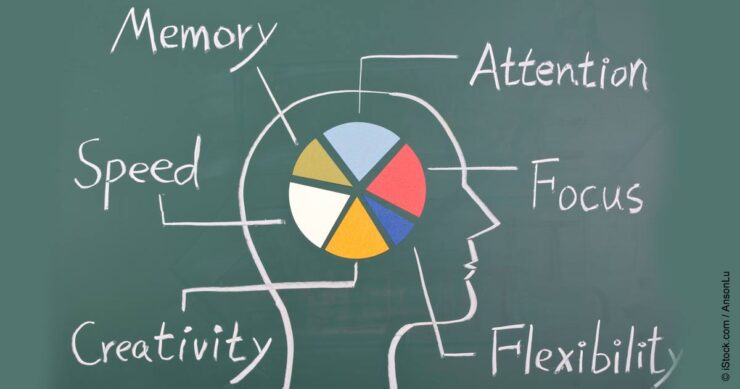
For musicians, a good memory is crucial. Simply remembering 20-30 songs complete with lyrics and faultless music is an impressive achievement. Therefore it’s unsurprising that research conducted by Dana and Stanford University concluded that learning a musical instrument enhances memory, language and speech skills, among other abilities. In this blog, we take a look at the link between memory and music…
Many musicians have different techniques for recalling what they need to play.
While some musicians can rely on good old muscle memory and repetitive practice, others have their own tricks of the trade.
On the Last Minute Musicians Facebook page, solo trumpet player and teacher Eric Brookes gave some advice on learning a piece of music.
I learnt in a performance class once that, when trying to learn a piece from memory, it is recommended one takes a nap straight after as this helps the brain commit what you’ve just practiced to memory. I also find I can frequently recall events or stories from years ago much clearer than a lot of my non-musical friends.
Due to the amount of work musicians must put in to become adept at their craft – as explored in our guide to the theory of practising an instrument – it is also widely believed that learning an instrument expands working memory capacity. This is particularly beneficial for students taking exams.
 Loading ...
Playing a Musical Instrument Can Raise Your IQ
All estimated to have had exceptionally high IQs, there is a reason why Mozart, Beethoven and Bach are considered geniuses.
All three celebrated composers learned to play their instruments from a young age. Some scientists even believe in the “Mozart effect”, which suggests that listening to Mozart could temporarily boost certain cognitive abilities. While the original 1993 study has since been widely debated and the effect appears to be modest and short-lived, there is stronger evidence that actively learning to play an instrument has lasting cognitive benefits.
In 2004, a study by E. Glenn Schellenberg was published in Psychological Science showing that IQ scores increased in children after 36 weeks of music tuition.
Even those who choose to pick up an instrument at middle age still have the opportunity to increase their IQ and their hearing, self-discipline, attentiveness, and coordination. For younger learners, our article on how different types of music affect student learning explores this topic further.
Thanks to studying and learning tempo, rhythm and pitch, the process of learning an instrument is even rumoured to help musicians interpret emotions.

As well as improving memory, playing a musical instrument will also:
- Helps coordination and precise hand movement – see a woman playing her violin during brain surgery to ensure she kept all her functions.
- Keep a healthy heart (according to the University of Maryland) allowing more blood to flow through blood vessels
- Improve stroke recovery, as reported by News Medical
The Crossover Between Music and Maths
Learning an instrument and, importantly, learning music theory can improve mathematical intelligence, enhancing both logic and reasoning skills.
This is perhaps best demonstrated in the work of Mozart who, whilst being an excellent pianist, was also remarkably logical in his compositions and virtually all other aspects of his life.
Many mathematicians have studied the work of Wolfgang Amadeus Mozart, attempting to understand his complex numerical sequences, codes and musical cryptograms.
Johann Sebastian Bach was also a mathematic enthusiast who often used his own name to spell out a series of musical notes, therefore musically signing his own work.
How Music Reshapes Your Brain
Neuroscientists have discovered that playing a musical instrument is one of the most demanding cognitive activities the brain can undertake. It simultaneously engages auditory, visual, and motor systems, requiring the brain to process multiple streams of information at once. Research using brain imaging has shown that musicians have a larger corpus callosum – the bridge connecting the two hemispheres of the brain – which allows information to travel faster and through more diverse routes.
A landmark study by researchers at Northwestern University found that musical training strengthens the brain’s ability to process speech sounds, which in turn supports reading ability and language development. These benefits are not limited to those who start young; adults who take up an instrument also show measurable changes in brain structure and function, reinforcing the idea that the brain remains remarkably adaptable throughout life.
Which Instrument Increases IQ the Most?
One of the most common questions people ask is whether certain instruments offer greater cognitive benefits than others. While some studies have suggested that piano and keyboard instruments may provide a slight edge – largely because they require coordinating both hands independently while reading two clefs – the overall research consensus is that the type of instrument matters less than the consistency and quality of practice.
Any instrument that challenges you to read music, develop fine motor skills, and listen critically will provide cognitive benefits. String instruments, wind instruments, percussion, and voice all engage slightly different neural pathways, but all share the core benefits of improved memory, attention, and executive function. The best instrument for boosting IQ is simply the one you will practise regularly. If you are considering getting started, our guide to the cost of music tuition can help you plan your budget.
Benefits of Learning an Instrument at Every Age
For children, the benefits are particularly striking. Studies have shown that children who receive musical training perform better in standardised tests for reading and maths, develop stronger working memory, and show improved emotional regulation. Music lessons also teach discipline, patience, and the satisfaction of incremental progress – skills that transfer to academic study and beyond.
For adults, picking up an instrument can help maintain cognitive sharpness, reduce stress, and provide a creative outlet. Research published in the Journal of Neuroscience has shown that even moderate amounts of musical training in childhood can produce lasting cognitive benefits decades later.
For older adults, music-making has been linked to a reduced risk of cognitive decline and dementia. A study in the Journal of the International Neuropsychological Society found that individuals with at least ten years of musical experience scored significantly higher on cognitive tests in later life. Whether you are eight or eighty, it is never too late – or too early – to start learning.
Poll Results: Should More People Learn a Musical Instrument?
We asked our readers whether more people should be encouraged to learn a musical instrument. The results were overwhelming.
Reader Poll Results – 304 voters
An overwhelming 98% of respondents believe more people should be encouraged to learn an instrument
With 98% of the 304 respondents voting yes, it is clear that the musical community strongly believes in the transformative power of learning an instrument. This aligns closely with the scientific research outlined above, which consistently demonstrates benefits for memory, intelligence, and overall brain health.
Sources
Do you find that playing an instrument improves your memory? Do you have any tips for remembering difficult pieces? Let us know in the comments below!