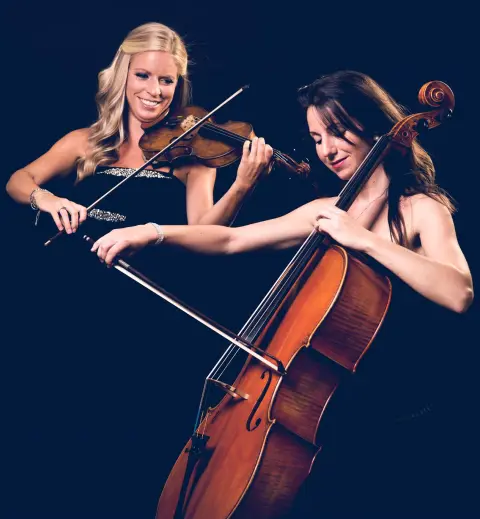
Background Music Bands for Hire

Browse 637 background music bands and musicians available for hire across the UK, with 5544 reviews from real clients averaging 5 out of 5 stars. Average price £747. This category covers any act suited to playing at a relaxed volume: jazz trios, string quartets, classical guitarists, solo pianists, harpists, acoustic duos and more. Whether you need elegant music for a drinks reception, a wedding breakfast or a corporate dinner, every act listed here is experienced in performing as background entertainment without overpowering conversation.

Each profile includes audio samples, videos, reviews and pricing so you can compare acts side by side. Use the filters below to narrow results by location, price and style.

Rated Excellent (5/5) from 5544 reviews of Background Music Bands
Adding the wow factor to events and weddings world-wide for over 10 years

7 reviews

Watford, Hertfordshire

Book from £2730 - get a quote

Add to favourites
Modern String Quartet/ Trio/ Duo for Hire - Classical/Pop/Rock/Bollywood/Jewish

55 reviews

Bushey, Hertfordshire

Book from £350 - get a quote

Add to favourites
Contemporary party band!

5 reviews

Slough, Berkshire

Book from £540 - get a quote

Add to favourites
A modern and skilled duo specialising in outstanding performances!

0 reviews

Hook, Hampshire

Book from £496 - get a quote

Add to favourites
Classy, Smooth, Hits, Classics. Vocals/piano/bass

3 reviews

Wimborne, Dorset

Book from £395 - get a quote

Add to favourites
From up beat party music to relaxing acoustic songs!

11 reviews

Borehamwood, Hertfordshire

Book from £1060 - get a quote

Add to favourites
Multi-instrumentalist playing accordion, piano, saxophone, guitar, wind synth..

3 reviews

Poole, Dorset

Book from £245 - get a quote

Add to favourites
A versatile trio of virtuoso musicians

3 reviews

Harrow, Middlesex

Book from £765 - get a quote

Add to favourites
Jive and Swing band for any event whether private or public!

1 review

Bagshot, Surrey

Book from £1560 - get a quote

Add to favourites
Authentic Swinging Sound for your Event

14 reviews

North West London

Book from £968 - get a quote

Add to favourites
Saxophone-led jazz group

1 review

North West London

Book from £610 - get a quote

Add to favourites
Incredibly talented and experienced acoustic trio

7 reviews

Poole, Dorset

Book from £336 - get a quote

Add to favourites
A pair of unique and charming performers that will delight time and time again

4 reviews

Harrow, Middlesex

Book from £250 - get a quote

Add to favourites
Lively 3pc Band/Duo performing classic hits from 60s to present

6 reviews

Greenford, Middlesex

Book from £677 - get a quote

Add to favourites
An Ingredient That Guarantees Packed Dancefloors, Unforgettable Memories

5 reviews

Egham, Surrey

Book from £1650 - get a quote

Add to favourites

Showing 301-315 of 637 results
Rated Excellent
TrustPilot 5 Stars

Browse categories similar to Background Music Bands

How much does it cost to hire Background Music Bands?

£ Low Price
from
£100
££ Average Price
from
£747
£££ High Price
from
£7080
The average price for Background Music Bands is £747. Above you will also find a budget price and high end price. Contact the act you like for an accurate quote.

Frequently asked questions


Sound limiters are now common at many UK wedding venues, particularly those in residential areas or with noise-sensitive neighbours. They work by cutting the power to amplified equipment if the volume exceeds a set threshold. Most professional bands can work within standard limiter settings without any real impact on the performance. If your venue's limiter is set at 95dB or above, the majority of bands will have no difficulty. Below 95dB it is worth flagging to the band in advance, as they may need to adjust their setup, for example by using an electronic drum kit instead of an acoustic one, or opting for a smaller line-up. Ask your venue for the exact decibel level and pass it on when you make your enquiry, so the band can confirm they can accommodate it.

As a general guide, a 3-piece band needs a performance area of roughly 3m x 3m. Add approximately 1m of width for each additional musician. A 5-piece band would therefore need around 3m x 5m as a minimum. Most bands will also need a small amount of additional space at the sides or rear for equipment cases during the performance. A raised stage is not essential but does help the band make a bigger visual impact, particularly in larger rooms. The performance area needs to be flat, dry and close to a power supply. If you are unsure whether your venue can accommodate a particular band, share the dimensions with them when enquiring and they will be able to advise. Venues with unusual layouts or low ceilings are worth flagging too.

Most professional bands provide a playlist through their PA system during intervals, so there is no gap in the music and no awkward silence while they take a break. This is usually included as standard and the band will typically put together a playlist that fits the mood of the evening. Some acts offer an upgraded DJ service where a member of the band or a dedicated DJ manages the music between sets, takes requests and keeps the energy going. This is usually available as a paid add-on. Check the act's profile or ask when enquiring if this is something you would like.

In most cases, no. The majority of professional bands provide music through their PA system during intervals and after their final set, so your guests will have continuous music throughout the evening without needing a separate DJ. This is usually included in the booking. If you want a more interactive DJ experience, with someone to take requests, mix tracks and keep the dancefloor going after the band finishes, many bands offer this as an optional upgrade, or you can book a DJ separately. It is worth deciding early how late you want music to continue, as a band's final set will typically finish by midnight or the venue curfew, and a DJ can be a cost-effective way of extending the night.

Professional bands take their commitments seriously and cancellations are rare, but illness, accidents or unforeseen circumstances can occasionally affect a booking. It is worth checking what provisions are in place when you book. Many acts and agencies have contingency arrangements, such as calling on dep musicians or arranging a suitable replacement act at short notice. When booking, make sure you receive a written contract that sets out the cancellation terms clearly, for both sides. If you are booking through an agency, ask specifically what happens in the event the act cannot perform. Keeping communication open with your band in the weeks before the event also helps flag any potential issues early.

Booking background music bands as early as possible increases the chance of securing their availability on your event date, particularly during busy times of the year. However, many acts also accept last minute bookings, and we have successfully arranged performances for clients with just a few hours' notice.

The cost of hiring musicians can vary significantly depending on the type of act. The average price is currently £747. Budget-level acts may be available for as low as £100, while top-tier acts can command prices as high as £7080.

Background music is a job rather than a genre. It means live music that fills a room and sets a tone without asking anybody to stop and listen, so people can talk over it comfortably. The acts listed here are booked for that purpose, and they range from a single instrumentalist to a small group. What they have in common is judgement rather than repertoire. A good background act reads the room, keeps the volume where conversation still works, and knows when to lift things and when to stay out of the way. Around half describe themselves as playing jazz, with acoustic and classical the next most common, but the style matters less than the way it is played.

For most background bookings, yes. Nearly six in ten of the acts listed here offer a solo or duo option, and it is usually the better fit: a single pianist, guitarist or saxophonist fills a room without dominating it, needs very little space, and costs less than a full group. A trio or quartet suits a larger space, a high ceiling, or a room where a solo instrument would disappear, and it gives more variety across a long booking. The deciding factors are the size of the room and how many guests there are, not the prestige of a bigger line up. Describe the space when you enquire and let the act recommend.

Jazz is the most common, mentioned by around half the acts here, and it suits the job because it works at low volume and does not demand attention. Acoustic covers and classical repertoire are the next most common, with around a quarter of acts offering each. Beyond that you will find bossa nova, easy listening, film and show music, and instrumental arrangements of familiar pop songs. If you want something specific, whether that is a particular era, a language, or purely instrumental with no vocals, say so at the enquiry stage. Most acts carry a broad enough repertoire to shape a set around a brief.

Yes, and around half the acts here mention weddings. It is one of the most common uses, particularly for the parts of the day that are easy to overlook: guests arriving, the drinks reception, the wedding breakfast, and the gap while photographs are taken. Those stretches are where a day can feel flat without music and where a full band would be wrong. Many couples book a solo or duo for the daytime and a larger band or DJ for the evening. Some acts here can cover both, which is usually cheaper than two bookings, so it is worth asking. Agree the timings early, since background work is mostly about fitting around a running order.

Anywhere people are talking, eating or arriving. The most common are a drinks reception, a seated meal, a networking session at a corporate event, and the period while guests gather before the main part of the day begins. It also works well to cover a transition, for example while a room is turned around or while photographs are being taken, where silence would leave a gap. What background music does not suit is a moment when you want attention: a first dance, a speech or a performance slot needs a different kind of booking, and the two are often combined across one event.

It should not be, and this is the single most important thing to settle. A background act is booked precisely to sit under conversation, and an experienced one will pitch the volume so people can talk at a normal level without raising their voices. Say explicitly at the enquiry stage that you want background rather than performance volume, because the same musicians often do both. Tell the act the room size, the guest numbers and whether the space is hard surfaced, since a room with stone or glass carries sound far more than a carpeted one. If the venue has a sound limiter, mention it, though background level is rarely anywhere near a limiter threshold.

Often, yes, and it is worth asking. Many acts here can move from quiet background playing during a reception or meal to something more up tempo later, either as a longer set or as a shorter burst to lift the room. Be clear about what you want and when. A background booking and a performance set are different jobs and are usually priced differently, so agree the shape of the evening at the enquiry stage rather than asking on the night. If you want dancing later, check whether the line up you have booked is the right size for it, since a solo instrumentalist that suits a meal may be too thin for a dance floor.

Yes. Around one in six of the acts listed here mention restaurant or hotel work, and regular residencies are a common arrangement, whether that is a weekly slot, weekend evenings or a seasonal booking. A regular booking is a different conversation from a one off. Be clear about how often, what hours, and whether you need the same performer each time, since availability for a standing commitment is much narrower. Also confirm the practical points before agreeing: where the act will set up, whether there is power nearby, whether you or they provide any amplification, and how it works around service.

Fewer than most people assume. One is enough for a room of up to around eighty people if the instrument suits the space, two covers most weddings and corporate receptions comfortably, and three or four is for a large room, a high ceiling or several hundred guests. Adding musicians raises the volume floor as well as the cost, which can work against you for background music specifically. A quartet playing quietly is harder to achieve than a duo playing naturally. Describe the room and the guest numbers when you enquire and take the act's advice, since they will have played rooms like yours before.

Yes, within reason. Most acts will take a brief on style, era and feel, and will avoid anything you specifically do not want, which is often the more useful instruction. Sending a handful of reference tracks is usually more effective than a long list. Specific song requests are best sent well ahead of the date so they can be prepared or arranged. Bear in mind that background music works differently from a performance set: a familiar song played quietly can pull attention into the room rather than settling it, which is why many acts steer towards instrumental arrangements and less obvious material for this kind of booking.

Longer than a performance booking but in shorter blocks. A typical arrangement is two or three hours on site covering a reception and a meal, played as sets of around 45 minutes with breaks, rather than continuous playing. Continuous music across several hours needs more than one performer or a longer break structure, so say if that is what you need. Quotes are based on how long the act is on site rather than time played. Give a running order when you enquire, including when guests arrive and when you want music to stop, since background work is largely about fitting around the rest of the day.

It depends on the size of the act and the room. Around three in five of the acts here include a PA or sound system, and where amplification is needed the quoted price usually includes it. Many background bookings need no PA at all. A classical guitarist, a harpist or a string duo in a normal sized room carries perfectly well unamplified, which is one of the format's advantages and avoids cables and setup entirely. What you should confirm is whether the act needs power and where, how much space they need, and whether anything is required from the venue. For a large or hard surfaced room, ask specifically whether they will amplify.

Yes, though it needs more thought than indoors. Sound disperses outside with nothing to reflect off, so a solo acoustic instrument that fills a room can vanish in a garden. Either accept that it will only be heard nearby, which is often fine for a drinks reception on a terrace, or plan for amplification and a power supply. Provide a covered area regardless. Instruments do not tolerate rain or damp, and direct sun causes tuning problems over a long afternoon. Wind is the underestimated one, since it carries sound away and takes music off stands. Agree a wet weather alternative when you book.

Frequently asked questions about Background Music Bands, how to register and how results are ordered are in the help & FAQs.

Hire Background Music Bands in the UK

Background music sets the tone for an event without competing for attention. The right act creates atmosphere, fills silences and gives a room a sense of occasion, all while allowing guests to talk, mingle and enjoy themselves. It is one of the most requested types of live entertainment for weddings, corporate functions and private parties alike.

What counts as a background music act?

Almost any musician or ensemble can perform as background music if they have the experience and judgement to pitch their volume correctly. The most popular choices include jazz trios and quartets, string quartets, solo harpists, pianists, classical guitarists and acoustic bands. Solo vocalists performing to a backing track are also a common option, particularly for drinks receptions and evening meals. The key skill is restraint: a good background musician reads the room and adjusts their volume and repertoire to suit the moment.

Background music at weddings

Weddings often call for background music at several points during the day. A string ensemble or harpist might play during the ceremony and drinks reception, while a jazz band takes over for the wedding breakfast. Some couples also book their evening band to play an acoustic or unplugged set during the meal before switching to a full performance later. If you are planning music for multiple parts of the day, look for acts that offer flexible set formats or consider a singing pianist or guitarist who can cover several hours without needing a full band setup.

Background music for corporate events

Corporate dinners, awards ceremonies, product launches and networking events all benefit from well-chosen background music. Classical ensembles and jazz groups are the most popular choices for corporate settings, but Latin bands, swing bands and even subtle electronic sets can work depending on the brand and audience. For larger events with multiple rooms or stages, you may want different acts performing simultaneously to create distinct atmospheres.

How much do background musicians cost?

The cost of hiring background music varies widely depending on the type and size of act. Solo performers such as pianists, guitarists and harpists typically start from around £300 for a two-hour set, while a jazz trio or string quartet will usually range from £600 upwards. The average price for a background music act is currently £747. Use the price comparison section on this page to compare rates across the 637 acts listed.

Hire live Background Music Bands
View Favourites