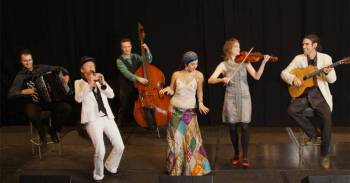
Jewish / Klezmer Bands for hire in London

London has the largest Jewish community in the country, and its klezmer and Jewish bands are among the busiest and most experienced anywhere in the UK. Compare 40 acts covering London and the home counties, from traditional klezmer ensembles led by clarinet and accordion to modern Jewish function bands that carry a full dancing set. Every act has audio and video samples, prices and reviews, with 369 reviews rated 5 out of 5 by real clients, and the average price is £1,200. Use the filters below to compare quotes and check availability for your date.

Many London bands specialise in the simcha circuit and know the North West London synagogues, hotels, private clubs and corporate venues well, from Hampstead and Golders Green out to Stanmore, Elstree and Borehamwood. Whether you are planning a wedding, a bar mitzvah or a corporate celebration, listen to a few demos first, as line-ups run from a solo instrumentalist to a full band and repertoire ranges from strictly traditional to contemporary.

Rated Excellent (5/5) from 369 reviews of Jewish / Klezmer Bands
One of Britain's best Klezmer/Balkan Bands

3 reviews

East London

Available in London

Book from £1215 - get a quote

Add to favourites
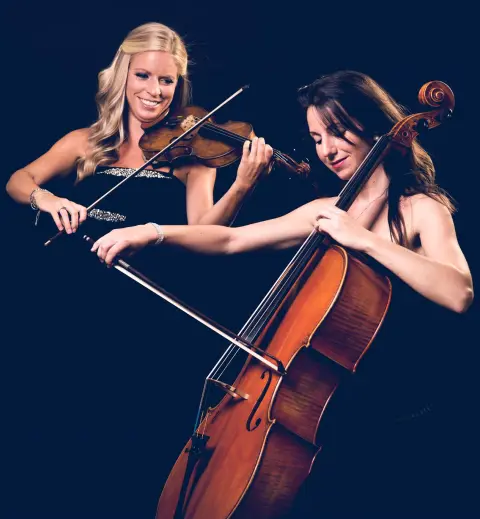
Virtuosic string ensemble

6 reviews

East London

Available in London

Book from £496 - get a quote

Add to favourites
Exhilarating, passionate Klezmer, Balkan and Gypsy!

6 reviews

North London

Available in London

Book from £150 - get a quote

Add to favourites
Playing the traditional music of North-East London

3 reviews

North London

Available in London

Book from £2190 - get a quote

Add to favourites

Exciting Klezmer Band playing both traditional and original repertoire..

5 reviews

North London

Available in London

Book from £1100 - get a quote

Add to favourites
Traditional Klezmer music with jazz infleunces

2 reviews

East London

Available in London

Book from £1070 - get a quote

Add to favourites
Fun and dynamic 6 piece Klezmer band

3 reviews

South East London

Available in London

Book from £1000 - get a quote

Add to favourites
The Royal Union is a band, a stage show, a concert experience!

3 reviews

West London

Available in London

Book from £2891 - get a quote

Add to favourites
12 or 10 piece high end luxury show band

0 reviews

North West London

Available in London

Book from £10030 - get a quote

Add to favourites
Two smooth voices & one guitar blending in harmony!

16 reviews

East London

Available in London

Book from £765 - get a quote

Add to favourites
Soul classics to current pop tunes with an original & unique twist

20 reviews

East London

Available in London

Book from £1652 - get a quote

Add to favourites
Versatile singer singing Pop, Rock, Jazz and Soul to suit any event

13 reviews

East London

Available in London

Book from £350 - get a quote

Add to favourites
Playing the best Top40, pop, funk, disco and soul dance floor fillers!

15 reviews

South West London

Available in London

Book from £1975 - get a quote

Add to favourites
For lovers of modern club music and classic soul dance floor fillers!

11 reviews

South West London

Available in London

Book from £2990 - get a quote

Add to favourites
Classy 6-piece pop, funk and soul party band!

3 reviews

South West London

Available in London

Book from £2313 - get a quote

Add to favourites
Showing 1-15 of 40 results
Rated Excellent
TrustPilot 5 Stars

How much does it cost to hire Jewish / Klezmer Bands available in London?

£ Low Price
from
£150
££ Average Price
from
£1,200
£££ High Price
from
£10,266
The average price for Jewish / Klezmer Bands available in London is £1,200. Above you will also find a budget price and high end price. Contact the act you like for an accurate quote.

Frequently asked questions


If your venue is within the London Congestion Charge zone, clarify with your chosen act how they handle this before confirming the booking. Some jewish / klezmer bands include it in their quoted price; others add it to travel expenses afterwards. The charge is currently £18 if paid on the day or in advance, or £21 if paid by midnight of the third day after travel. It is also worth checking whether your venue falls within the Ultra Low Emission Zone (ULEZ), which covers all London boroughs. The ULEZ daily charge is £12.50 for vehicles that do not meet the emissions standard. As with the Congestion Charge, some acts will absorb this cost and others will pass it on, so it is worth confirming upfront. Car parking costs should also be discussed in advance.

Booking jewish / klezmer bands in London as early as possible increases the chance of securing their availability on your event date, particularly during busy times of the year. However, many acts also accept last minute bookings, and we have successfully arranged performances for clients with just a few hours' notice.

The cost of hiring musicians in London can vary significantly depending on the type of act. Prices currently range from £150 to £10,266, with an average of £1,200.

Sound limiters are now common at many UK wedding venues, particularly those in residential areas or with noise-sensitive neighbours. They work by cutting the power to amplified equipment if the volume exceeds a set threshold. Most professional bands can work within standard limiter settings without any real impact on the performance. If your venue's limiter is set at 95dB or above, the majority of bands will have no difficulty. Below 95dB it is worth flagging to the band in advance, as they may need to adjust their setup, for example by using an electronic drum kit instead of an acoustic one, or opting for a smaller line-up. Ask your venue for the exact decibel level and pass it on when you make your enquiry, so the band can confirm they can accommodate it.

As a general guide, a 3-piece band needs a performance area of roughly 3m x 3m. Add approximately 1m of width for each additional musician. A 5-piece band would therefore need around 3m x 5m as a minimum. Most bands will also need a small amount of additional space at the sides or rear for equipment cases during the performance. A raised stage is not essential but does help the band make a bigger visual impact, particularly in larger rooms. The performance area needs to be flat, dry and close to a power supply. If you are unsure whether your venue can accommodate a particular band, share the dimensions with them when enquiring and they will be able to advise. Venues with unusual layouts or low ceilings are worth flagging too.

Most professional bands provide a playlist through their PA system during intervals, so there is no gap in the music and no awkward silence while they take a break. This is usually included as standard and the band will typically put together a playlist that fits the mood of the evening. Some acts offer an upgraded DJ service where a member of the band or a dedicated DJ manages the music between sets, takes requests and keeps the energy going. This is usually available as a paid add-on. Check the act's profile or ask when enquiring if this is something you would like.

In most cases, no. The majority of professional bands provide music through their PA system during intervals and after their final set, so your guests will have continuous music throughout the evening without needing a separate DJ. This is usually included in the booking. If you want a more interactive DJ experience, with someone to take requests, mix tracks and keep the dancefloor going after the band finishes, many bands offer this as an optional upgrade, or you can book a DJ separately. It is worth deciding early how late you want music to continue, as a band's final set will typically finish by midnight or the venue curfew, and a DJ can be a cost-effective way of extending the night.

Professional bands take their commitments seriously and cancellations are rare, but illness, accidents or unforeseen circumstances can occasionally affect a booking. It is worth checking what provisions are in place when you book. Many acts and agencies have contingency arrangements, such as calling on dep musicians or arranging a suitable replacement act at short notice. When booking, make sure you receive a written contract that sets out the cancellation terms clearly, for both sides. If you are booking through an agency, ask specifically what happens in the event the act cannot perform. Keeping communication open with your band in the weeks before the event also helps flag any potential issues early.

Band size affects both the sound and the budget. A 3-piece can fill a dancefloor just as effectively as a larger act and tends to be better suited to smaller venues or those with sound restrictions. A 4 or 5-piece gives a fuller sound and more stage presence, which works well in larger rooms. Bigger show bands with brass sections, multiple vocalists or additional musicians create a more spectacular impact but cost more and need more space. As a rough guide, match the band size to your guest numbers and venue capacity. For events up to around 100 guests, a 3 or 4-piece is usually ideal. For 150 or more, a 4 or 5-piece tends to work better. For very large events over 300 guests you may also need to consider whether the band's own PA system is sufficient, or whether additional sound equipment will be needed.

Klezmer is the instrumental folk music of the Ashkenazi Jewish communities of Central and Eastern Europe, carried to Britain and America by emigration and revived from the 1970s onwards. It is dance music above all. The tunes were written to move a wedding party, and that is still what they do best. The sound is distinctive. A clarinet or a violin carries the melody with a vocal, sighing quality, sliding between notes rather than stepping cleanly between them, over a driving rhythm from accordion, bass and drum. The mood can shift from exuberant to mournful and back inside a single tune. Seventeen of the acts listed here describe klezmer as part of what they play. Beyond the handful of melodies that have travelled into general familiarity, the repertoire is large and mostly unknown to British audiences, which is a good part of its effect at an event.

They overlap, but they are not quite the same booking, and the distinction is worth knowing before you enquire. A klezmer band plays a musical genre. The repertoire is the Eastern European Jewish instrumental tradition, and such a band can play a concert, a festival, a birthday or a corporate evening as readily as a wedding. Most of the acts listed here are klezmer bands in that sense, and several are specialists with awards and international touring behind them. A Jewish wedding band is a description of a service. It implies knowing the shape of the day: playing as guests arrive, holding the room around the ceremony, and leading the dancing afterwards, with the repertoire and the timing each of those needs. Plenty of bands do both. But the profiles on this page describe the music far more often than the occasion, so if you are booking for a wedding or a simcha rather than for a concert, say so in your first message and ask directly about the parts of the day you need covered.

Many can, and it is worth asking specifically rather than assuming, because these profiles describe the music much more often than the occasion. The points in the day where the band matters most are the arrival, the period around the chuppah, and the dancing that follows. The hora is usually the moment that matters most: it is a fast circle dance, it can run a long time, and it needs a band that knows how to build it, keep it going and bring it to an end, rather than one working through a set list. So ask three things. Whether they have played Jewish weddings before, and how many. Whether they can lead the hora rather than simply play the tune. And whether they will work to your running order, including any timing constraints around the ceremony. A band that answers those confidently is the right booking. One that hesitates may still be an excellent klezmer band, and better suited to a different kind of event.

The clarinet and the violin are the voices of klezmer and carry most of the melodies between them. Twelve of the acts here list a violin and seven a clarinet, which is close to the balance you would expect. Underneath, the accordion is near standard, with six acts naming one, and the rhythm usually comes from a bass and a drum. Traditionally that drum is a poyk, a bass drum played with a beater alongside a cymbal, and one band here still names it that way. Brass appears in the larger line-ups: trumpet, trombone and occasionally French horn. Size varies more than in most categories. There are duos on this page and there are seven-piece ensembles, and both are authentic to the tradition. A duo suits a ceremony or a drinks reception. If the point of the evening is dancing, you want five players or more.

Very often, and it is one of the more useful things to ask about. Eleven of the acts here also describe Balkan, Roma or wider Eastern European repertoire, and a few range further into Greek, Turkish, Russian and Yiddish theatre song. This is not padding. These traditions grew up alongside one another across the same region and share tunes, scales and rhythms, so a band moving between them is doing something historically natural rather than diluting the set. For an event it usually means a longer and more varied evening than a strictly klezmer programme would give you. If you want klezmer and nothing else, say so, because several of these acts lead with the broader mix. Equally, if what you want is an evening of Eastern European dance music with klezmer as one strand of it, this page has rather more to offer than the category name suggests.

Yes, and it is a natural fit, since the celebration afterwards is a party with dancing at the centre of it. Four of the acts here name bar and bat mitzvahs specifically, and more will have played them without saying so on their profile. Ask about two things. The first is the age range in the room. A bar or bat mitzvah usually mixes twelve and thirteen year olds with three generations of adults, and a band playing only traditional repertoire may not hold the younger half of the room for a whole evening. Eleven of the acts here mention a DJ, either offering one or working alongside one, which is the usual answer to this. The second is the balance you want. Some families want klezmer throughout; others want it for set pieces such as the entrance and the dancing, with something more contemporary in between. Both work, but decide before you enquire, because it changes which act suits you.

Klezmer is instrumental at its core, so a good number of these bands do not sing at all. That is traditional rather than a shortcoming. Where there is singing it is usually in Yiddish, the language of the communities the music comes from, and the repertoire includes theatre songs from the New York Yiddish stage as well as older folk material. Some acts also sing in Hebrew. The words are rarely the point for a British audience, and bands will generally introduce a song so the room knows what it is hearing. If you want a singer, check the line-up rather than assuming, because it is easy to book an instrumental ensemble by mistake. And if you want something specific sung in Hebrew for a ceremony, raise that separately. It is a different skill from leading a dance set, and not every band offers both.

Two sets of around forty five minutes across a two hour period is the usual shape, with recorded music or a single player covering the break. Most of these bands will discuss longer or shorter formats. Weddings and simchas often need something less tidy than that, and it is worth raising early. A day can involve a short set as guests arrive, a quiet presence around the ceremony, then a long and high-energy dance session later on. That is three different jobs at three points in the day rather than two neat sets, and the dancing in particular can run well past its scheduled slot if the room is enjoying itself. So ask what the booking covers in hours on site rather than in playing time, and agree in advance what happens if the dancing overruns. Bands are usually glad to keep going, and it is far easier to settle the cost of that beforehand than at midnight.

Most will, and klezmer suits outdoor playing better than many styles. It began partly as processional music for open courtyards and streets, and the loud instruments in the line-up, the clarinet, brass and drum, carry well in open air. The practical points are the usual ones with a few specifics. Violins and accordions do not tolerate rain, damp or direct heat, so the band needs cover and shade even on a dry day, and the ground has to be firm and level enough for a drum and for players who may be standing rather than seated. Music stands need weighting in any wind at all. If you want the band to play for a procession, or to move with your guests rather than stay in one place, say so when you enquire. Some of these acts do that regularly and are set up for it. Others are seated ensembles who will need a fixed spot and a power supply.

Most arrive self-contained, with a PA suitable for the room, microphones and their own instruments. It is worth confirming rather than assuming, particularly with the smaller line-ups. Klezmer bands need less amplification than most function bands. A clarinet, a violin and a drum are loud acoustically, and for a ceremony, a drinks reception or a room of a hundred or so, several of these acts can play with no PA at all. That is genuinely useful if your venue is awkward, has a sound limiter, or has nowhere sensible to put speakers. Lighting is usually not included and most of these bands do not carry any. If your dancing runs into the evening in a dimly lit room, arrange that separately. Ask as well whether they bring recorded music for the breaks, because not every act does, and gaps are noticeable in a dance-led evening.

London is where this category is concentrated. Twenty of the forty one acts listed here are London based, including most of the dedicated klezmer specialists, so it is the one part of the country where you can genuinely compare several ensembles rather than book whoever is free. That depth is worth using. Listen to more than one, because the range is wider than the category name suggests: there are traditional ensembles playing the historic repertoire, conservatoire-trained groups, bands that lean towards Balkan and Roma material, and duos better suited to a ceremony than a dancefloor. They are not interchangeable. Practically, London is also where space and access cause the most trouble. Check the performance area and the load-in arrangements before you confirm anything, and ask whether travel and parking are covered in the quote. These are mostly small ensembles arriving in several cars, so that can be a real proportion of the fee rather than a rounding error.

Frequently asked questions about Jewish / Klezmer Bands available in London, how to register and how results are ordered are in the help & FAQs.

Hire Klezmer and Jewish Bands in London

London sits at the centre of Jewish life in Britain, and the capital keeps a deep pool of klezmer players, Jewish function bands and simcha specialists working every weekend. That depth means real choice, whether you want a traditional trio for a ceremony and reception or a full band to lead the dancing, and many acts also cover corporate and cultural events across the city. For a wider selection of live music for a London celebration, you can also compare our London wedding bands.

Jewish weddings and simchas in London

At a London Jewish wedding the band carries the celebration, leading the hora and the chair dance to Hava Nagila before working through freylekhs, Israeli standards and mainstream party sets. Experienced London acts are used to the pace of a big simcha and to venues from Mayfair hotels to North West London synagogue halls, and they will happily plan the running order with you and your caterer in advance.

Bar and bat mitzvahs in London

London has one of the busiest bar and bat mitzvah scenes in the country, and a good band knows how to hold a room full of teenagers and their families at once. Expect a blend of klezmer, current pop and party anthems, often with a host or MC to run the dances and games. Bands that thrive on that high-energy brief also turn up among our London party bands.

Getting a band into a London venue

London gigs come with practical details worth settling early. Many central venues sit inside the Congestion Charge zone, parking and load-in can be tight, and some hotels and listed buildings enforce sound limiters or a strict finish time. A band that regularly plays London will know these venues and factor travel, parking and timings into the quote, so mention your venue when you enquire. Some line-ups sit close to the jazz world too, so it is worth hearing our London jazz bands if you want a more relaxed reception sound.

What does a London klezmer or Jewish band cost?

In London a klezmer or Jewish band is typically priced between £150 and £10,266, with an average of £1,200. Line-up size, travel across the city and set length all move the figure, and a soloist or duo for a reception costs far less than a full band for a wedding or bar mitzvah. Use the price comparison section on this page to see live quotes from 40 London acts and check your date.

Hire a klezmer band in London
View Favourites